Why Is It Important to Visit the Dentist During Orthodontic Treatment?
Straighter Teeth Can Improve Your Oral Health and More!
March 31, 2018Top Benefits of Choosing a Family Dentist
April 13, 2018
Did you just get your braces on? Congratulations! You’re on your way to a healthier, straighter smile! You can expect the best results if you practice good oral hygiene habits. This means, in addition to brushing and flossing every day, you should plan to visit Dr. Varley every 6 months during your orthodontic treatment. Find out why you still need to see a dentist even if you are seeing an orthodontist regularly.
A More Beautiful Smile
If you have braces or another orthodontic appliance, you are taking a wonderful step in the right direction when it comes to your oral health. Countless studies have been done on the effects of having a straighter, more beautiful smile. Not only can a straighter smile create more confidence in adults, but it also affects how a child develops. Child orthodontics seeks to fix bite and alignment issues in children that can become severe oral health problems in the future.
Receiving orthodontic treatment as an adult or teen is also proven to make a person more confident. Studies show that people who straighten their teeth are seen as more confident, happy, successful, wealthy, and even more trustworthy. An Invisalign study also found that people could land a job over their competition if they had a straight smile compared to someone who didn’t. Bottom line: orthodontic treatment can do wonders for your life and your oral health.

Your Orthodontic Treatment
There are so many options when it comes to orthodontic treatment. Patients who see an orthodontist often get traditional metal braces, lingual braces or ceramic braces. Lingual braces are metal braces placed on the backs of your teeth. Ceramic braces are like metal braces, but they are made from ceramic material that is naturally white. With all 3 of these options, cleaning the teeth becomes much harder than it was without having brackets and wires bonded to the teeth. Your time with braces is one of the most common times for tooth decay and gum disease problems to happen.
Already, many people struggle to brush and floss their teeth enough. Studies show that tooth decay is the most prevalent chronic disease that affects children and adults today. You know tooth decay by the term “cavities”. Tooth decay happens even more with braces. Every time a patient eats, food is mashed up into brackets and wires when a patient chews. This can happen every single time a patient eats, snacks and drinks. That food then sits on a person’s teeth and in the brackets until it is cleaned out. Cleaning out brackets can be a time-consuming job, but one that needs to be done.
Taking Care of Your Teeth
Braces bring so many benefits to everyone who has them. However, they can bring many oral health problems if you’re not careful. We have patients all the time that are currently undergoing orthodontic treatment. During comprehensive exams, we often help these patients with proper brushing and flossing. Children and adults alike benefit from seeing their dentist during their time with braces. An orthodontist should show you how to clean brackets and wires correctly and how to make it easier. We often show patients how to care for their braces as well. Key tips that help our patients include:
- Brush after every meal instead of only morning and night. You get food stuck in your braces every time you eat. That food also builds up around the brackets on the teeth. Brushing more often reduces the food and plaque buildup.
- Use a proxabrush or waterpik. A proxabrush is a brush that is shaped like a tiny Christmas tree. It can get all that stuck food out of your brackets. A waterpik shoots water through cracks in your teeth and in your brackets to get food out as well.
- Use threadable floss. You can choose from threadable floss or floss threaders, that help you put regular floss through the gaps in your teeth easier. You thread the floss like you would a needle, under your wires and then you floss like normal.
- Visit the dentist during your treatment!

It’s Important to Visit the Dentist
Brushing and flossing are vital for maintaining excellent oral health during your orthodontic treatment. However, you also have to visit the dentist. Some patients think that seeing an orthodontist is enough because an orthodontist at least looks at your teeth. However, their work is entirely different than a dentist. They won’t examine you for tooth decay and won’t treat cavities or gum disease problems unless their facility offers dental services. Most don’t do both orthodontics and dentistry. That means, you need to visit the dentist at least twice a year like you normally would.
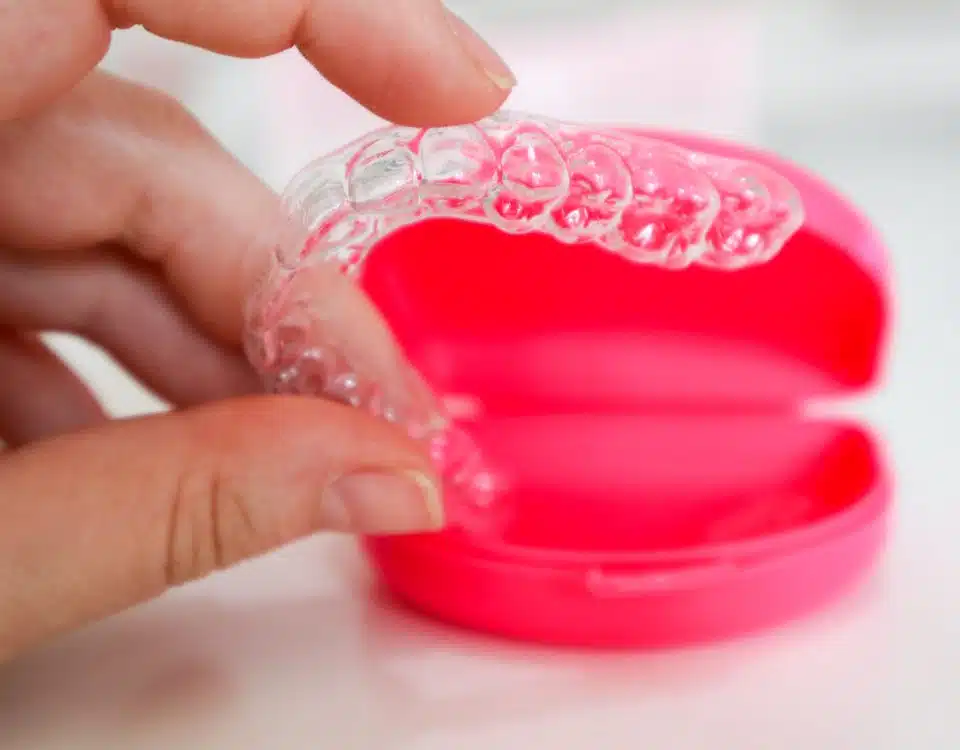
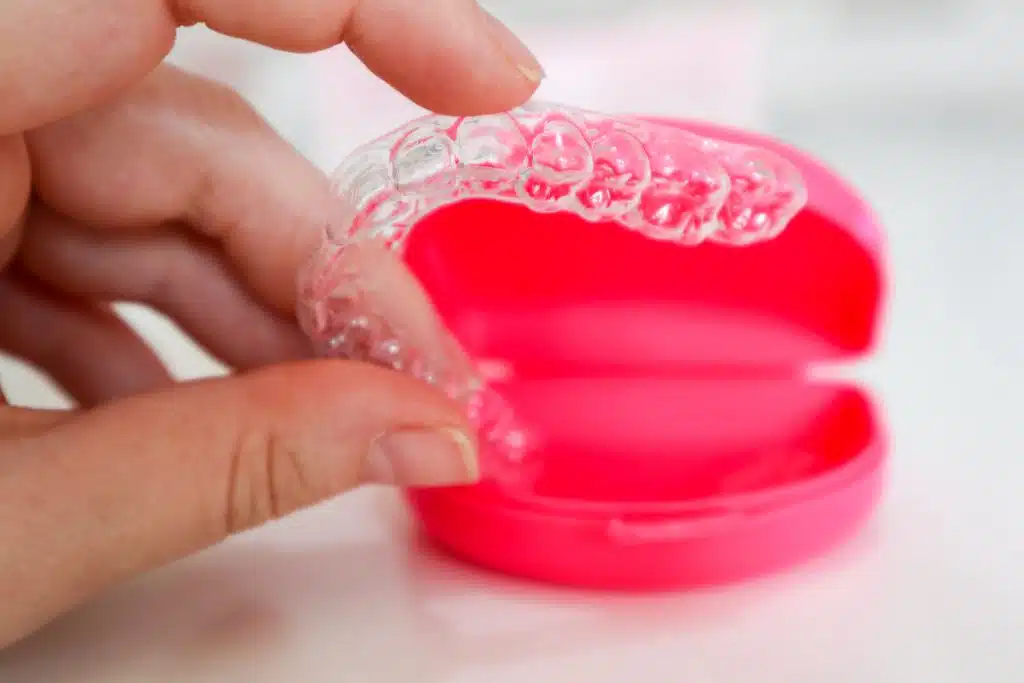
If you are prone to tooth decay, you actually need to see us more often than twice a year to prevent cavities and tooth erosion during your time with braces. No one wants decay and craters in their teeth when their braces come off, right? However, if you don’t want to deal with all the brackets and wires, try Invisalign treatment! We provide this orthodontic treatment that consists of a series of transparent aligners you switch out every week. Slowly, the aligners move your teeth into a straighter position and are just as effective as metal braces. However, you can remove the aligners when you need to for eating, drinking, sports, activities, and especially brushing and flossing.
Straight and Healthy Smile
Whether you have traditional braces or removable ones that we provide, we can help you keep your teeth healthy during your orthodontic treatment. You just have to remember to come see us several times a year! To learn more about our Invisalign treatment or to get tips for oral hygiene during braces, call Stonebrook Family Dental today at (303) 872-7907!