Teeth Grinding and How To Fix It
The Pros and Cons of Cosmetic Dentistry
February 8, 2019What To Do When You Break A Tooth
February 22, 2019
Do you wake up in the morning with a sore jaw and teeth? You may be grinding your teeth at night. Teeth grinding refers to the clenching or rubbing of your teeth together while you sleep. If this is happening to you, try considering a night guard. These tools help guard your teeth from constant grinding and help maintain your oral health. Learn how this simple fix can improve your sleep and mouth!
What Is Teeth Grinding?
Many people wake up in the morning with tired, sore jaws and mouth aches that just don’t seem to go away. Although it doesn’t happen to everyone, teeth grinding is a serious, and painful, condition that can cause significant damage to your teeth, if not treated. Teeth grinding refers to the practice of either clenching your teeth tightly or continuously rubbing them against each other. Bruxism, the medical term for teeth grinding, includes the gnashing/grinding of teeth and is considered a sleep-related movement disorder. While some teeth grinding happens during the day unconsciously, it is most common to clench and grind your teeth during the night as you sleep, whenever it’s the hardest to manage. While mild bruxism may not require treatment, in some people, bruxism can cause additional problems, such as jaw disorders, headaches, and damaged teeth. Teeth grinding can be caused by a number of reasons, as well, such as stress, anxiety, depression, heavy alcohol, or sleep disorders. Although there isn’t one major cause, typically those people who struggle with snoring or obstructive sleep apnea tend to have issues with teeth grinding, as well.
Since bruxism typically occurs at night, it is important to identify the symptoms so as to determine whether you may be suffering from teeth grinding. The most common symptom of teeth grinding is a headache, but other symptoms include muscle aches, enlargement of facial muscles, ear pain, stiffness of the shoulders and neck, and sleep disorders. The teeth are especially affected by teeth grinding and show abnormal wear and mobility. These adverse effects on teeth can lead to fracture and loss of teeth, which can be costly to repair. Since you are grinding your teeth during your sleep, this can cause damage to your cheek from the chewing movement and can increase tooth sensitivity. If you think that you might be suffering from teeth grinding, watch out for signs like grinding sounds at night, lower jaw swelling, rhythmic contractions of the jaw muscles, or lingering pain in the face. If you notice that your teeth are flattened, fractured, chipped, or loose, or if you have worn tooth enamel, those can be signs of bruxism, as well.
Treatment For Teeth Grinding
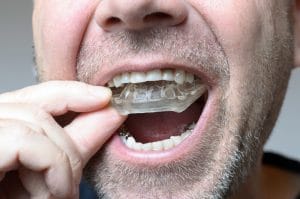
Above all else, if you feel like you may be experiencing any of the symptoms previously described or have other concerns about your teeth and jaw, make an appointment with your dentist to be examined for possible teeth grinding. The best way to treat bruxism and prevent tooth wear is by using an occlusal appliance. There are many names, like occlusal splints, occlusal bite guards, night guards, bite plates, and bruxism appliances, but they all have the same function. Each appliance is custom made, and is a specially fit mouthpiece that fits over your top or bottom teeth. Typically they are worn at night whenever you grind your teeth the most, and if you are consistent with their wear, they can help reduce jaw muscle pain and protect your teeth.
Other appliances are also used to treat bruxism. Called mandibular advancement devices, these appliances are also custom made and fit over your top and bottom teeth, but their main purpose is to bring your bottom jaw (mandible) forward. This is commonly used whenever your teeth grinding is caused by a sleep disorder, and helps manage snoring and sleep apnea. If stress or anxiety is the cause of your teeth grinding, behavioral management is recommended. Sometimes both behavior management and occlusal appliances are used together for improved results.
Tips About Using Night Guards
Night guards are one of the most common appliances worn for bruxism. They are created by taking an impression of your teeth, which is then sent to a laboratory. The lab will then create a custom-fit acrylic night guard based on your impression for you to wear at night. Just like any other mouth device, though, your night guard needs to be cleaned daily with a toothbrush and toothpaste, dried completely, and then stored in cold tap water. This process will protect your night guard against bacterial growth and you against any sickness. Avoid all cleaners that contain alcohol as they are known to shorten the life span of night guards. If you want to deep clean your night guard, once a week you can clean it with a denture-cleaning tablet. Night guards don’t last forever, so whenever you notice damage to yours, it is time for a new one. Never use a damaged night guard because small pieces can dislodge in your mouth as you bite on it at night.
Protect Your Oral Health
If you are noticing that your jaws are sore in the morning or that your teeth seem to be worn down, you might be suffering from teeth grinding. Putting an end to your discomfort will come by being evaluated by your dentist and having a treatment plan developed for you. Call Stonebrook Family Dental at (303) 872-7907 for a consultation to protect your teeth and jaw from the effects of teeth grinding. Our experienced staff is here to safeguard your health and improve your life!