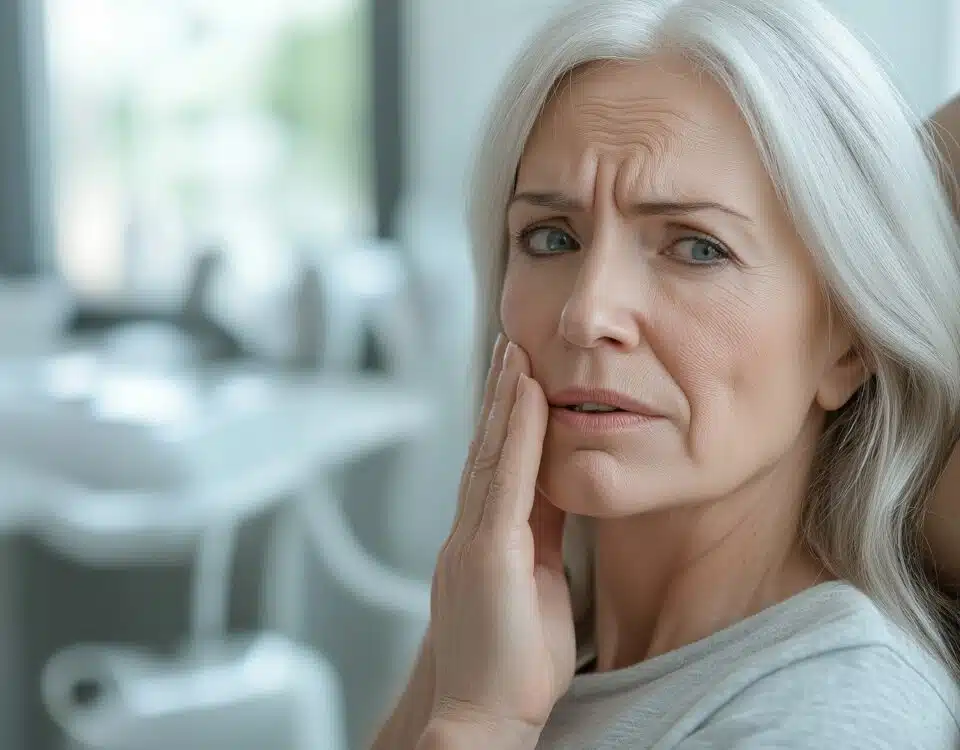
Do Your Teeth Hurt When There’s Cold Weather?

Teeth Whitening: Get a Radiant Smile in Time for the Holidays
December 8, 2021
Tis the Season to Have Healthy Teeth and Gums
December 21, 2021
‘Tis the season for cold weather, and your teeth are sensitive. This happens to a lot of people in winter, but what is the cause? Do cold temperatures actually affect your teeth? Yes, they can! If you want to know more about cold weather and tooth sensitivity, here is what we want you to know.
Cold Weather and Tooth Sensitivity
Your teeth can be sensitive to cold weather because when the temperature outside is low, your teeth are exposed to the cold air for a longer period of time.
If you suffer from tooth sensitivity with cold weather, you’re not alone. 4 out of 10 people live with tooth sensitivity due to exposed dentin, pain that can be triggered when cold weather comes along.
Cold air causes the enamel on your teeth to shrink, and when it shrinks, it exposes the dentin underneath. The dentin is a softer part of your tooth that contains nerve endings. This makes your teeth more sensitive to temperature changes, like cold weather.
Cold Weather and Crowns
Another problem with cold weather is that it can make your crowns more brittle. If you have had a dental restoration placed in your mouth, then the enamel on your teeth may have been removed to place it. This means that the restoration makes up for what was lost in the area where it was placed. When this area is exposed to cold air, your crown will shrink because it is made out of porcelain. When this happens, the area around the crown may become sensitive.
Trembling Sensations
The third problem that many people experience when they leave their homes in winter is that they feel like their teeth are trembling or vibrating. This sensation is usually felt when the weather is windy, which causes your teeth to chatter. You may also feel like your teeth are trembling even if it is not windy out; this happens because the freezing cold temperatures make your nerve endings more sensitive.
Treating Cold Weather Tooth Sensitivity at Home
You can treat tooth sensitivity at home by using a desensitizing toothpaste. The toothpaste will add a protective coating on the surface of your teeth so that they do not become exposed to temperatures as easily. You should also avoid any foods and beverages that may further irritate your teeth, such as soda, coffee, and alcohol. These can all cause tooth sensitivity because they are acidic, and will wear away the enamel on your teeth.
Treating Cold Weather Tooth Sensitivity with a Dentist
The very best way to treat tooth sensitivity at home is by seeing a dental professional for treatment. At Stonebrook Family Dental, Dr. Kevin Varley is here to help you. We can provide you with an in-office treatment that will relieve your pain and prevent it from getting worse. For tooth sensitivity, common treatments include:
- Desensitizing toothpaste. This contains compounds that help block transmission of sensation from the tooth surface to the nerve, and usually requires several applications before the sensitivity is reduced.
- Fluoride gel. An in-office technique which strengthens tooth enamel and reduces the transmission of sensations.
- A crown, inlay or bonding. These may be used to correct a flaw or decay that results in sensitivity.
- Surgical gum graft. If gum tissue has been lost from the root, this will protect the root and reduce sensitivity.
- Root canal. If sensitivity is severe and persistent and cannot be treated by other means, your dentist may recommend this treatment to eliminate the problem.
When to See a Dentist
If you are experiencing tooth sensitivity when it is cold outside, it is important to see a dentist. The symptoms of tooth sensitivity can worsen over time, and may lead to pain when eating and drinking. It is also important to seek treatment if you are experiencing any other symptoms, such as:
– A throbbing sensation in your teeth
– Tooth pain on cold, windy days
– A tingling sensation in your teeth
– The feeling that something is caught in your tooth
If you are experiencing any of these symptoms, we recommend that you make an appointment today.
Make an Appointment with Stonebrook Family Dental
Conveniently located in Aurora, Colorado, Stonebrook Family Dental is here for you all year long, not just when the weather is cold. If you are experiencing tooth sensitivity this winter, don’t hold off on making an appointment. Call us today at (303)-872-7907 for an appointment to come speak with Dr. Varley and learn more about how you can get a pain-free smile this winter.