Why Do You Need a Dental Cleaning?
All About Dental Anesthesia
August 28, 2018Benefits of Dental Botox
September 11, 2018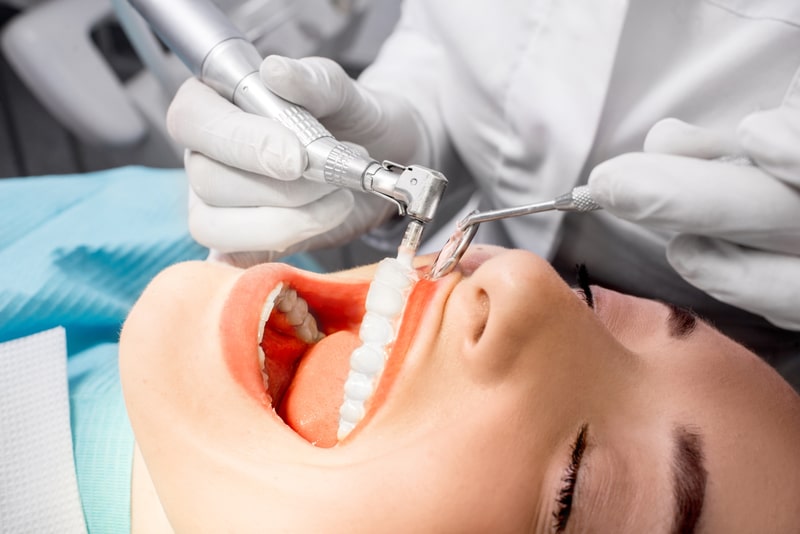
Did you know that dental cleanings and exams are so important that most insurances cover those appointments? The American Dental Association recommends that every person see the dentist (even infants and children) at least twice a year for their dental cleaning and exam. This is the time where we can find oral health diseases and do all that we can to stop them in their tracks. Let us show you what we do at this dental cleaning and why you should schedule some time for one!
How Many People Visit the Dentist?
Many people don’t think about their oral health and their overall health being connected, when they are very much are. Many things enter your body through your mouth, especially food and drink. What you consume will quite literally determine if you develop chronic conditions due to nutrient deficiencies or too much sugar and fat in your diet. It can also determine if you get oral health diseases, because these develop from the substances that come in contact with your teeth.
People must eat and drink in order to survive, and they have to do that all day long. That means the teeth are constantly coming in contact with different substances. It’s part of the reason your teeth are made up of about 96% mineral content—to keep them hard despite all the harsh substances. However, because so much passes by your teeth and gums, it’s also the reason that the ADA recommends that all people visit the dentist at least twice a year for a comprehensive exam and dental cleaning.
Despite that recommendation for 100% of people (even infants), studies show that only about 65% of people actually see a dentist each year in the United States. Among those, they may only be visiting the dentist once, which isn’t enough to prevent oral health diseases like gum disease and tooth decay.

Why Does It Matter?
A comprehensive exam seeks to find instances of oral health diseases. We can use this exam to see if tooth decay is forming on the tooth surfaces or down deep within them. This is a time to find that decay and fix it, and it’s also a time to check for gum disease, oral cancer and more. We check for these problems because studies show that tooth decay is the most “chronic, prevalent disease” among children and adults according to the National Institutes of Health. Gum disease is also one of the worst diseases, affecting more than 64.7 million American adults.
Both of these conditions are preventable with the right oral care. A dental cleaning is when we do a thorough cleaning of your teeth, removing stuck-on substances that will decay your teeth over time. We can teach patients how to brush and floss their teeth properly to avoid oral health diseases. The fun part about all those oral health diseases, is that they are all preventable. We can’t find them, however, if you’re not getting your dental cleaning twice a year.
What Happens at a Dental Cleaning?
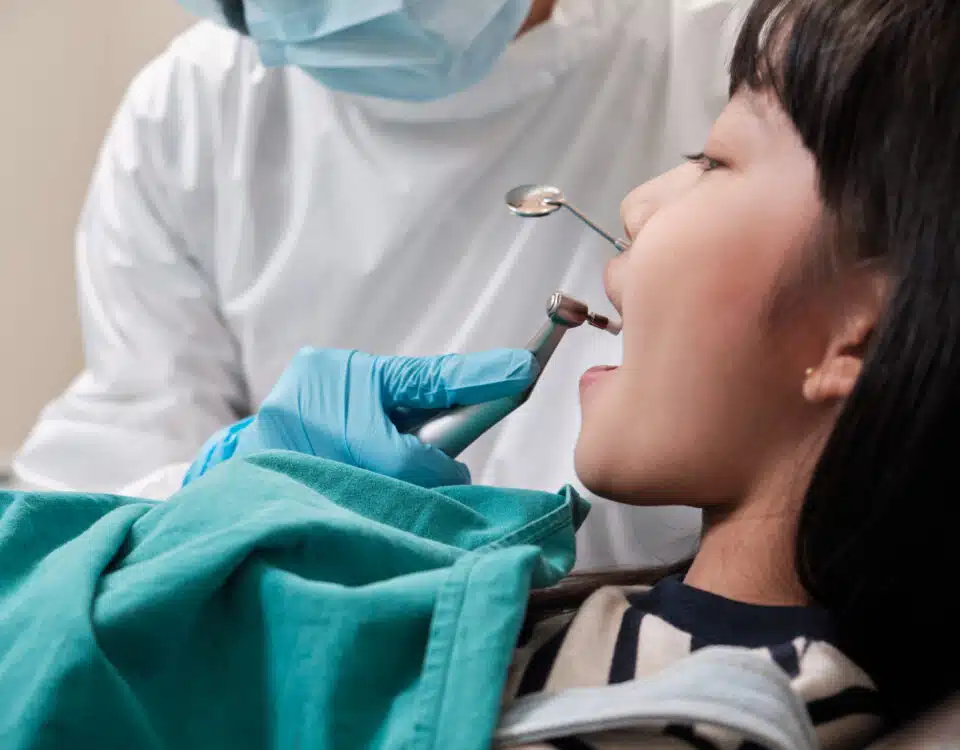
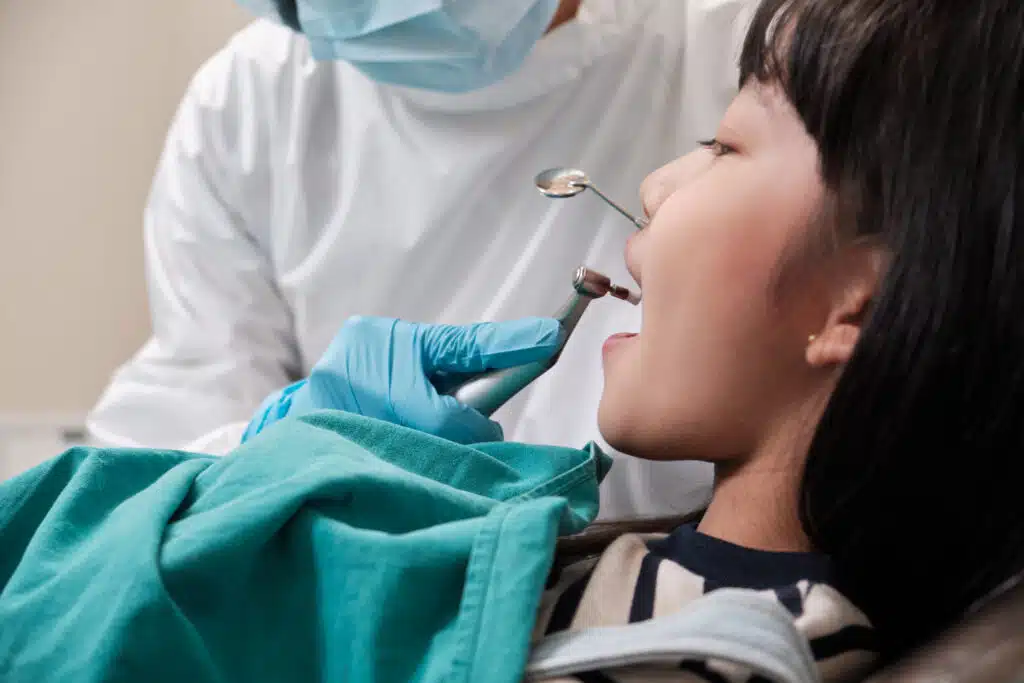
We don’t simply brush and floss your teeth at a dental cleaning, even though these two oral hygiene habits do happen. A professional dental cleaning is a deep cleaning of your teeth that can remove not only plaque, but also stuck-on tartar (mineralized plaque) and stains. A dental cleaning is a service that doesn’t require any anesthesia or stress.
At your dental cleaning, you can expect us to:
- Brush your teeth with our rotating dental brushes that use dental-grade fluoridated toothpaste.
- Polish your teeth using a slow-speed handpiece. This has a soft rubber cup that spins on the end. Using a gritty paste, it can buff and polish your teeth so they are smooth to the touch and shiny.
- Remove tartar buildup. This can mineralize and become hardened parts of your teeth, especially around the gumline and behind the teeth. We use our dental tools to remove it, especially because a toothbrush can’t remove the minerals.
- Do an evaluation of biting, chewing and swallowing patterns.
- Use scaping and scaling tools to remove plaque in gingival pockets and around the gum line. If gum disease is present, a deeper cleaning of the gums may be needed.
- Floss between each tooth meticulously. We will use new floss to floss between each individual tooth several times. This can help us determine areas of gingivitis or gum disease. We can spot teeth that are also too tight together.
- Apply a fluoride treatment. This comes at the end of a dental cleaning, once the teeth have been polished and cleaned. A fluoride treatment allows us to provide you a shield of protection against decay-causing bacteria.
- Conduct an oral cancer examination and screening through checking your mouth, neck, cheeks and oral cavity for any lumps or abnormalities.

What Oral Health Habits You Should Have
At your dental cleaning, we may also apply antibiotic therapy such as for teeth that are sensitive to hot and cold. We always make sure to let patients know if we find oral health concerns, such as bleeding gums. This may indicate that a patient isn’t flossing their teeth like they should be.
The American Dental Association recommends flossing your teeth 1-2 times a day. They also recommend brushing your teeth at least twice a day (if not more), for two minutes at a time. These oral health habits coupled with a dental cleaning and exam every 6 months are the best ways you can avoid dental decay and disease. If you are due for your dental cleaning, call Stonebrook Family Dental today at (303) 872-7907!