Overcoming The Effects of Gum Disease
How Sedation Dentistry Can Decrease Dental Fears
November 14, 2019Don’t Go Cold Turkey On Your Oral Hygiene This Thanksgiving
November 28, 2019
One of the most common oral health problems is gum disease, or periodontal disease. Gum disease is an infection of the gums and tissues that hold teeth in place, and once they deteriorate, teeth can loosen and even fall out. While many cases of gum disease can be attributed to bad oral hygiene practices, lifestyle and medical factors like smoking, diabetes and certain medications can increase your likelihood of experiencing it. If your case is serious, you might need root planing and scaling to save your gums and teeth. Find out how to treat gum disease when it develops and what steps you can take to prevent it in the first place with this guide!
What Is Gum Disease?
One of the most common oral health problems that affects Americans each year is gum disease, or periodontitis. Gum disease is exactly what is sounds like: diseased gums. When the tissues that hold the teeth in place become infected from excessive amounts of plaque, disease forms and begins detaching the gums from your teeth. This can cause bloody gums, soreness, pain when chewing and eventual tooth loss. Your gums can begin receding (which creates loose teeth and sensitivity) and you can develop bad breath that doesn’t go away. Gum disease can occur for a variety of reasons, but there are certain lifestyle choices that tend to increase its development. Bad oral hygiene practices can lead to plaque buildup on the teeth, which causes gum disease, but hormonal changes in the body and certain medications can lead to periodontitis, too. Medical conditions like diabetes and an addiction to smoking can increase your risk for gum disease, as well. In otherwise healthy patients, periodontitis has a way of creeping up on them without showing any signs or symptoms beforehand. This is less common, but still a serious issue that many patients deal with each year. Knowing how gum disease develops and what you can do about it are two of the most important steps for disease prevention and a happier, healthier mouth.
Treating Decaying Gums
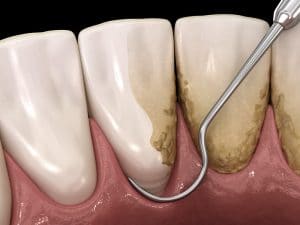
The first step to gum disease is gingivitis, which is characterized by red and swollen gums brought on by plaque. Gingivitis is an easy fix, though, if you just brush and floss your teeth regularly and schedule a deep cleaning with the dentist. However, when left untreated, gingivitis progresses into gum disease, which will necessitate professional intervention to curtail. Your dentist will first insist that you improve your oral hygiene routine at home, as well as eliminate any unhealthy habits, like smoking, from your life. From there, he or she will typically perform a scaling and root planing procedure that removes the hardened plaque and tartar off of your teeth. Scaling involves scraping the plaque off of your teeth with an ultrasonic hand tool while planing smoothes the root surface to prevent bacteria from attaching onto any rough patches. A local anesthetic is typically used to ease the discomfort that a scaling and root planing treatment causes, and once completed, your gum tissue will begin reattaching itself to your teeth again. After a few weeks, your dentist will examine your gums to review the regeneration process and determine whether or not you need another root planing and scaling treatment.
Tips For Keeping Your Gums Healthy
Out of all of the oral health problems you could develop, gum disease is one of the most preventable. Most cases of periodontitis are caused by poor dental practices, so the first thing that you should focus on is brushing and flossing your teeth each and every day. Make sure that you’re using fluoride toothpaste to clean your teeth as it’s helpful at preventing cavities by strengthening tooth enamel. Additionally, you should be meeting with your dentist every six months for regular dental checkups. These checkups include a deep cleaning of your teeth, an oral cancer screening and a thorough exam to ensure that your bite and teeth are functioning as they should be. Depending on the severity of your gum disease or your likelihood of developing it, your dentist may recommend using an antibacterial mouthwash to prevent bacteria from turning into decay-causing plaque. Mouthwash also prevents bad breath, which is a common side effect of periodontitis. Lastly, it’s a good idea to quit smoking since the carcinogens found in cigarettes have been proven to cause oral, throat and lung cancer. While an oral cancer screening can help diagnose cancer in its first stages, it won’t be enough if you continue to smoke. Smoking also causes the gums to detach from your teeth, as with gum disease, so you should do everything in your power to quit this addiction. By following these oral health tips, you’ll be able to kick periodontal disease to the curb and keep smiling with confidence.
Overcome Gum Disease With Our Help!
At Stonebrook Family Dental, we can help you overcome the effects of gum disease and get a healthy smile again. Whether you’re struggling with periodontitis or are due for a dental checkup, we can help! Call our office at (303) 872-7907 to schedule a consultation. Don’t let disease ruin your smile-call today to get your oral health back on track!