Sports Safety for Your Teeth
Treatment Options for Tooth Decay
August 14, 2018All About Dental Anesthesia
August 28, 2018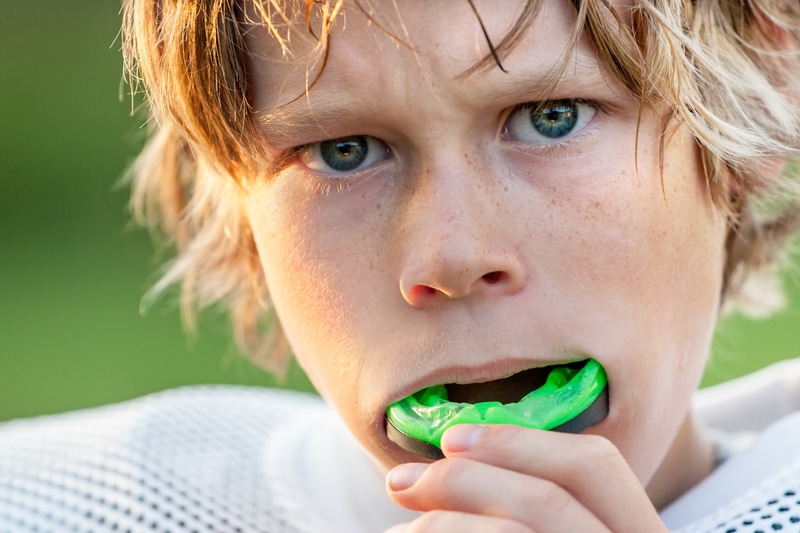
Athletes train for years to be good at the sports they do. That’s why injuries can be so upsetting when they happen. Mouth injuries can be devastating to a smile, especially if a tooth is knocked out. If you are an athlete, you can plan ahead and take measures to avoid sports injuries from happening to your teeth, gums, and mouth. Follow these guidelines for sports safety for your teeth to keep your smile protected for life!
How Common Are Dental Injuries?
Studies conducted by the Bureau of Labor Statistics, found that about 16% of people participated in sports in 2003. By 2015, 21% of people in the United States participated in an organized sport. That number has continued to rise. Coincidentally, so have dental injuries in contact sports. We are not just talking about adults either. Children and teens actually sustain more injuries in sports, which could be due to the fact that they may not know they need sports safety mouthguards. It’s reported that 5 million teeth are broken or injured each year in contact sports in the U.S. In many of the cases, mouthguards were not being used.
These injuries happen in contact sports such as soccer, baseball, martial arts and more. The more extreme the sport, the more a person should practice sports safety, especially with their mouth. Common sport injuries (that are also considered dental emergencies) include broken or cracked teeth, fractured teeth, cut lips, cheeks and gums, braces injuries, and knocked-out teeth. Almost all of these sports injuries can result in a person losing their tooth for good. Children also have a risk for a tooth to be hit up into the gums, which is serious.

What Can a Sports Safety Mouthguard Do?
The American Association of Orthodontics report found that 84% of children do not wear mouthguards for sports safety because they are not required to. This is one of the reasons children sustain so many injuries. Teens and adults are either required to wear mouthguards or they decide to.
Mouthguards are protective plastic or rubber coverings for the teeth that athletes wear as a barrier between the teeth and the cheeks. If a player’s face is hit by a ball, sports object or another player during a sport, that mouthguard will prevent broken teeth and other dental injuries. If a player has braces, it will prevent the braces from cutting up the cheeks. We highly recommend that patients use these guards when they play sports.
Types of Mouthguards
There are various types of mouthguards you can buy if you want to practice better sports safety with your oral health. The type you choose is important, as not all mouthguards are created equal.
- Store Mouthguards: These are mouthguards made of hard plastic that you can buy at many supermarkets and sports stores. They are only one-size-fits-all, which may not be ideal for children or even teens. These mouthguards are bulky and often leave large amounts of space between the guards and the teeth, which can still leave you susceptible to dental injuries. However, they are better than no mouthguard at all.
- Boil and Bite Guards: Bought at sports stores and supermarkets, these guards are more customizable. These are made from a rubber and plastic combination that comes in a smooth block. At home, you heat the block according to the instructions. When it cools down and is still warm, you bite down on the guard. If done correctly, you can have a fit that’s more snug. However, the plastic may not cover all of your teeth if biting is not sufficient when making the guard.
- Custom-made guards: Custom mouthguards are the best for sports safety. With these guards, you will come into the office and have exact impressions of your teeth made. Those impressions will go to a lab, where mouthguards will be made to protect your teeth. Because they are so snug, these guards are the best for preventing injury. Plus, they can be adjusted by the dentist.

Keep Your Smile Strong
If you don’t have a sports safety mouthguard yet, you can do all you can in other areas to keep your teeth strong and protected:
- Brush your teeth. It seems so simple, but brushing your teeth is one of the easiest ways to keep your teeth strong. Why? When you don’t brush, bacteria sits on your teeth, decaying them and weakening them. That leaves them susceptible to breaks and injuries. The American Dental Association recommends brushing your teeth at least twice a day, for two minutes at a time, making sure to scrub all tooth surfaces. Brush after every meal to keep your teeth even stronger.
- Floss your teeth. Keeping your teeth clean isn’t possible if you don’t floss, as flossing gets 40% of tooth surfaces that brushing can’t get to. Floss 1-2 times a day, making sure to use new floss each time, scraping along your teeth as you floss.
- See a dentist! The ADA recommends that every patient see their dentist at least twice a year for dental exams and checkups. A dentist can let you know if your smile is healthy and strong. If it’s not, they can help you know how to make it stronger.
- Use fluoride treatments and dental sealants. Find toothpastes, mouthwashes and other products with fluoride. This naturally-occurring mineral helps strengthen the teeth. Dental sealants are also great for patients, as it is a plastic dental coating we can place on the teeth to protect them from decay and erosion.
- Eat well. Avoid tons of sugary foods, as sugar is the substance that mixes with mouth bacteria to create plaque. That plaque destroys and weakens your teeth. Choose water and milk over sodas and juices and eat a diet low in added sugars.
Practice Sports Safety
The best way to practice proper sports safety for your mouth is to invest in a mouthguard that fits you perfectly. To have your custom guards made, call Stonebrook Family Dental today at (303) 872-7907!